

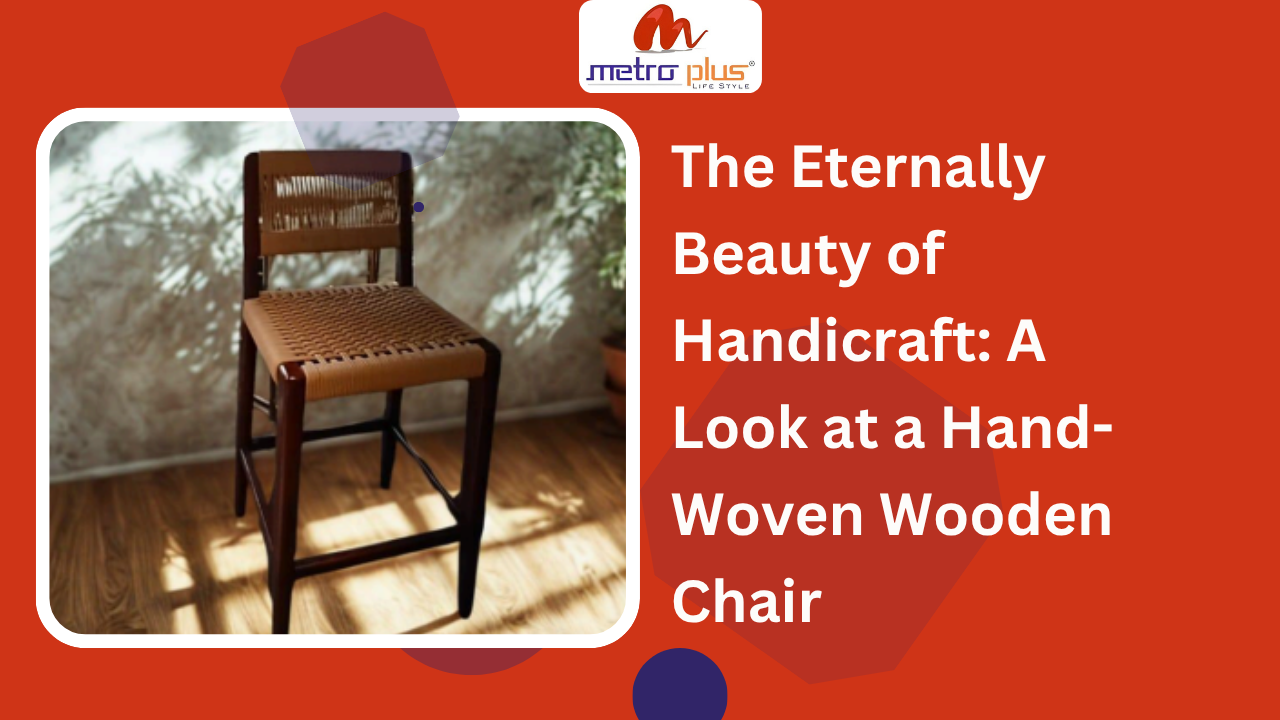
Amidst a time where slender lines, plastic material, and mass production
seem to be the epitome of modernity, the revival of the craft most makes
sense. This chair is not just furniture—it is a testament to tradition, a hymn of
praise to sustainability, and a call to the timelessly beauty of hand-woven form.
With cool, sunny brightness of wood floor and foliage contrasting, the chair
radiates an aura of serenity, reflection, and determination.
A First Glance: The Balance of Light and Form
On first glance, the eye is greeted to quiet balance of room, windows’ light
spilling in and draping gently on walls and floor. Filled with this light, the chair
occupies center space of room. Its wove back and seat are nicely worked,
packed to its wood frame, its face seems to invite the eye to stay in
appreciation of the delicacy of its beauty. Light helps to simplify the tactility of
the wove surface, and the glint of slightly worked wood, and the balance of
work and use.
Materiality and Construction
The chair is made of what looks like hardwood material—teak or walnut,
say—is known to be extremely durable and retain warm color. Dark black
color of supports and legs are tastefully balanced by lighter, earthy hue of
woven seat and back. All of them form visual balance, in which each material
does not overpower the other but warps the other in both shape and function.
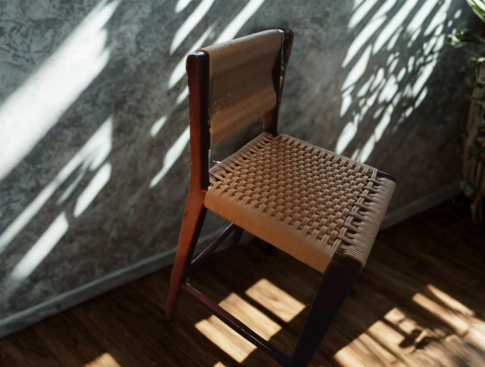
The defining characteristic of the chair is woven elements. The haptic quality
of the weave activates touch, so sitting becomes more sensory.
The building itself is a testament to longevity and vision. All the joints are
impeccable, tidy, and most likely made possible through old-fashioned
construction methods like mortise and tenon or dowel joining, the end result of
which is lifetime use for barely any hardware. The legs also slant, a touch of
lightness to otherwise solid construction.
Design Influences and Style
This chair is mid-century modern, that is, simplicity, natural materials, and
functionality. A restraint, yes, one of understated sophistication because there
is no gaudy ornament, no brash color, but instead clean lines and genuine
materials. This style started in the mid-20th century and continues so today for
its classic elegance.
One can also identify Scandinavian and Japanese design influences behind it.
Its open form with low profiled appearance and tip of natural material are an
embodiment of the minimalist standard within both design schools.
It is a declaration of a less-is-more creed wherein quality, form, and texture are
given greater importance over flamboyant decoration.
The Chair in Context: Interior Harmony
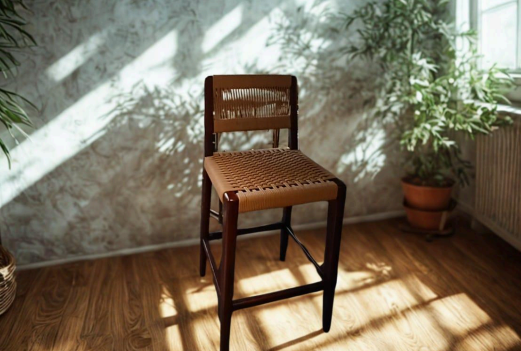
In a quiet and green space with wooden flooring and gentle natural light, the
chair is rightfully draped out of position. Setting does matter. The wooden floor
surface is experienced by the chair frame, smooth visual transition. There is
an infusion of nature from plants in the environment, which harmonizes with
the naturalness of the design of the chair.
It is this sort of setting that is ideal for slow living. The room does not yell—it
murmurs. It is a room where one can drink coffee in the morning, a favorite
book read, or one sits and sits. Under this sort of weather, bits of furniture
such as this are not functionalism but hint at purpose—they are part of a
genuine life, a cozy presence among swells of ordinary life.
Sustainability and Cultural Value
With the addition of handwoven material to its composition, the chair takes us
back through centuries of craftsmanship and tradition. It is, in some sense,
greater even than just a chair: it is a tale: of generations of handmade,
hand-to-hand passed-down legacy, of fingers which curl and fold and wind
themselves about one another in determination and endurance.
Versatility and Function
Other than looks, the chair design is appropriate for most settings. As a dining
set in a dining room, it would be comfortable and look good. As a single chair
at a reading desk or office, there is a place to sit and reflect. It adds a touch of
romance and personality to business settings like boutique hotels or
restaurants.
Its light color provides it with a versatility to suit almost any color
scheme—earth, subdued color schemes to loud, mixed-up decor. In front of a
whitewashed wall, like here, or against multicolored artwork and symbols, it
maintains its tranquil strength and flexibility.
A Living Object
Maybe the most beautiful thing about this chair is how it will age. The wood
will richen, the weave will come undone and darken, and the whole piece will
wear the marks of living—tactile patina where hands have rested upon it, wear
on the edges, memory patina. Nature is altered, but human-made things fall
out of fashion or deteriorate.
Therefore, the chair is alive, a partner in the rhythm of everyday life. It is not
transient or disposable. It invites to be slowed down, to enjoy well-crafted
things, to opt to endure.
Conclusion
This plain wood chair, so modest as to appear, is a compact bundle of design,
workmanship, and philosophy. It teaches us that furniture can be beautiful and
functional, derived from convention but eternally in appearance. It teaches us
that good design does not scream to be heard but speaks with restraint and
purpose.
In a time so marked by the next next big thing, this chair is an ode to the
beauty of the enduring. It does not simply ask us to sit, but to be—to unwind,
to ponder, and to rediscover the body in the world outside.